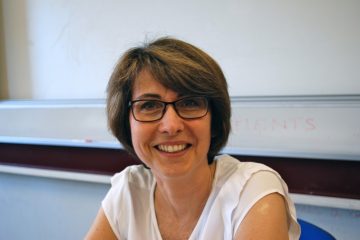
Monica Gotta
Gotta lab focuses on cell division processes in C. elegans embryo and in human cells, with a focus on asymmetric cell division, regulation of cell division timing and spindle assembly and orientation.

Gotta lab focuses on cell division processes in C. elegans embryo and in human cells, with a focus on asymmetric cell division, regulation of cell division timing and spindle assembly and orientation.

Pierre Gönczy’s main research interests lie in understanding fundamental cell division processes, notably in the context of a developing organism and with a focus on the mechanisms governing centriole biogenesis and centrosome duplication as well as asymmetric cell division, a crucial phenomena for generating cellular diversity during development and in stem cell lineages.

Beat Fierz lab focuses on the study of the structure, dynamics and function of chromatin and related multi-protein complexes in vitro and in cells. These investigations require an interdisciplinary approach at the interface of chemistry, biology and biophysics.
The Winssinger lab makes use of small molecules and chemistry techniques to probe biological mechanisms. To accelerate probe discovery, the lab has pioneered DNA-encoded library technologies and has extended this technique to fold peptides in constricted conformations and are applying this approach to mimic affinity proteins. Their research has also pioneered proximity-enabled chemistries and used it to image oligonucleotides in cellulo or in vivo, turn-on drugs in response to biomarkers and more generally develop methodology for logic-gated responses. As part of this program, the Winssinger lab is developing photocatalytic reactions in chemical biology and using bioluminescence as a light source for photochemistry.

The Loewith lab investigates the structures, functions and regulation of the two, broadly conserved, target of rapamycin (TOR) protein complexes. They use a combination of yeast genetics, cell biology, structural biology, chemical biology and biochemistry approaches and are particularly interested in how TOR complexes form higher order helical structures and how they are regulated downstream of mechanical changes in membrane tension.